

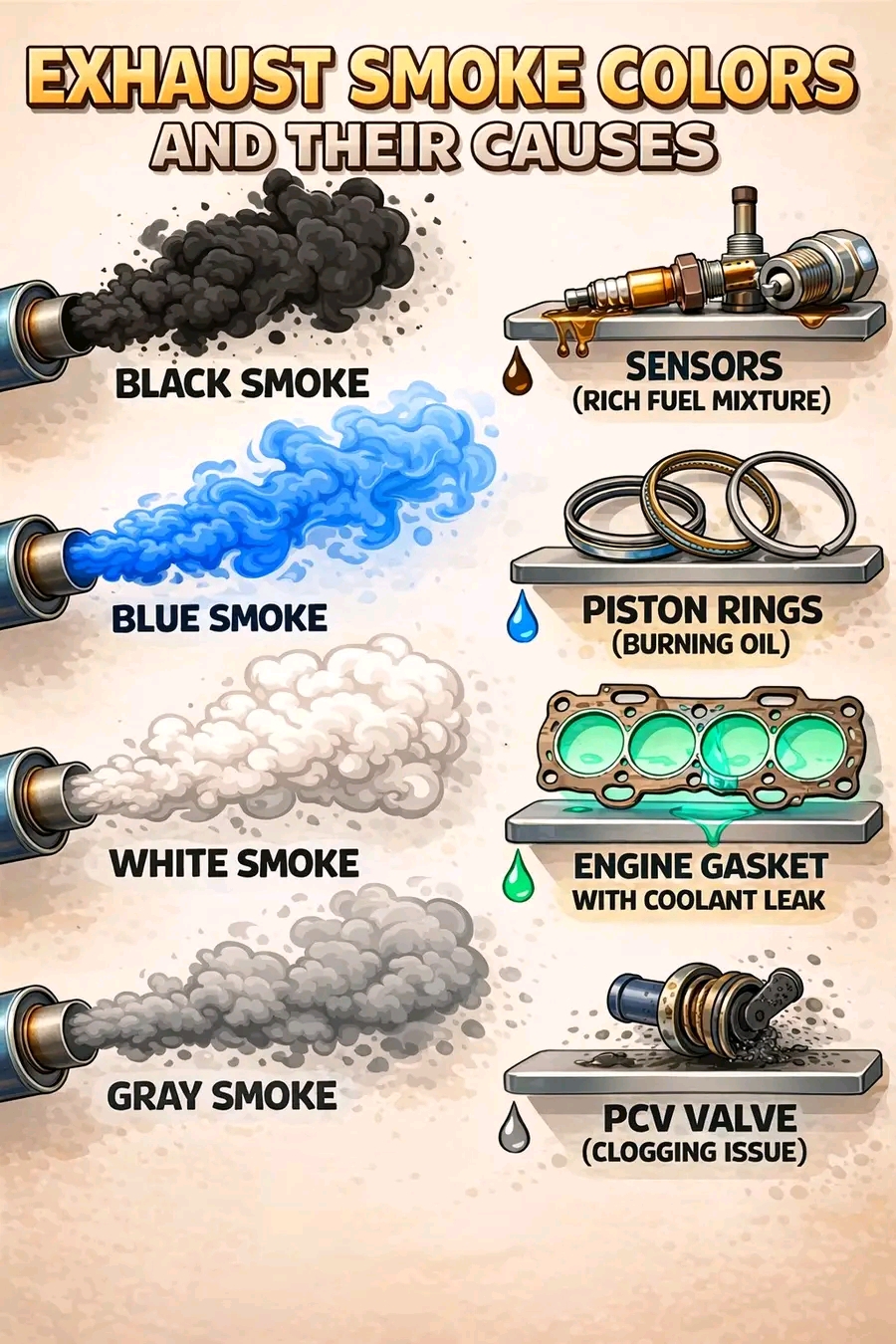
Black Smoke
Indicates a rich fuel mixture (too much fuel, less air). Common causes include faulty sensors, clogged air filter, or injector issues. Leads to poor fuel efficiency.
Blue Smoke
Means the engine is burning oil. Usually caused by worn piston rings, valve seals, or cylinder wear. You may notice oil level dropping quickly.
White Smoke
Suggests coolant leakage into the engine. Often due to a damaged head gasket. Thick white smoke with a sweet smell is a warning sign of serious engine trouble.
Gray Smoke
Can indicate a PCV valve problem or oil burning issues. Sometimes linked to transmission fluid leaks in automatic cars.
Each smoke color helps diagnose specific engine problems early—ignoring them can lead to costly repairs.
